Clinton County Auditor Financial Reports provide residents with clear insight into how county funds are collected, spent, and managed. These reports include annual statements, revenue and expenditure summaries, and results from public audits. They help taxpayers understand county finances and the accountability of local government offices. By reviewing these documents, citizens can see where money is allocated and ensure that public resources are used responsibly.
The Clinton County Auditor Financial Reports also highlight transparency in government operations. Residents can access detailed information about departmental budgets, program expenditures, and revenue sources. Public audits verify the accuracy of these reports, giving stakeholders confidence in the integrity of financial data. Exploring these reports allows the community to stay informed and actively engaged with local government decisions.
What is a Financial Report?
Financial reports are official documents that detail how a government entity, such as Clinton County Auditor, manages public funds. They provide a transparent view of the county’s income, spending, and overall fiscal health. Annual financial statements are a key example of these documents, helping residents, officials, and stakeholders track budgets and hold local government accountable. These reports show both where money comes from and how it is spent. They are essential for promoting transparency, ensuring government accountability, and allowing decision-makers to plan effectively. By presenting fiscal data like assets, liabilities, and fund balances, financial reports give a complete picture of the county’s financial condition at a specific point in time.
Understanding Annual Financial Statements
Annual financial statements break down the county’s financial activities in detail, offering insight into overall fiscal health. They help residents understand how funds are managed and whether public resources are being used efficiently. These statements are often accompanied by explanations, charts, and tables to make the information accessible to all citizens.
Key components include:
- Assets: Resources owned by the county, such as cash, investments, property, and equipment.
- Liabilities: Debts or obligations, including loans, unpaid bills, or pending legal settlements.
- Fund Balances: The remaining value after liabilities are subtracted from assets, indicating fiscal stability and available reserves.
Revenue vs. Expenditure Reports
Revenue and expenditure reports focus on specific aspects of county finances. They allow a detailed look at how money flows in and out of the county and provide information crucial for budgeting and accountability. These reports help taxpayers and officials track spending patterns and ensure public funds are used responsibly.
Revenue reports typically track income from:
- Property taxes and special assessments
- State or federal funding and grants
- Fees, fines, and service charges
Expenditure reports break down spending across categories such as:
- Public safety (police, fire, emergency services)
- Infrastructure and road maintenance
- Parks, recreation, and community services
- Administrative and operational costs
How to Access Clinton County Auditor Financial Reports
Accessing Clinton County Auditor financial reports and public audit documents is simple through the official website of the Clinton County Auditor. The county provides an organized online financial portal where residents can search, filter, view, and download official audit reports, annual financial statements, and other county records in just a few steps.
Visit the Official Auditor Website
- Open your web browser.
- Enter: https://clintoncountyauditor.org/
- On the homepage, look at the top navigation bar.
You will see menu options such as:
Home | How Do I | Financials | Real Estate | Property Search | Forms | Property Data Download
Navigation Path:
Click Financials, then select Financial Reports from the dropdown menu.
Open the Financial Reports Section
Once inside the Financial Reports area, you will see access to the county’s document repository and Open Finance portal.
This section contains:
- Annual Financial Statements
- Revenue Reports
- Appropriations / Expense Budgets
- Public Audit Reports
- Vendor Payment Records
- Payroll Data
Use the Online Financial Portal
The county uses an interactive online financial portal labeled “Open Finance.” On this page, you will see:
- A Financial Summary dashboard
- Budget, Checkbook, and Payroll tabs
- A search bar labeled “Search finance data”
Use the Search & Filter Tool
The portal includes a built-in Search & Filter Tool that helps users quickly locate specific county records.
Search by Keyword
- Click inside the “Search finance data” box.
- Type keywords such as:
- Annual financial statement
- Public audit
- Revenue
- Department name
- Press Enter.
The system will display matching results.
Filter by Year
If a year filter appears:
- Select a specific fiscal year (example: 2024, 2025).
- The results update automatically.
Filter by Report Type or Department
Users can narrow results by:
- Report type (Annual Report, Official Audit Report, Budget)
- Department (Sheriff, Engineer, General Fund, etc.)
- Fund category
View and Download Reports
After selecting a report:
- Click the report title.
- The document will either open in your browser or display download options.
Available Download Formats
Most Clinton County Auditor financial reports are available in:
- PDF Format
- Best for official audit copies and printing.
- Includes signed public audit documentation.
- Excel (.xlsx) Format
- Ideal for reviewing fiscal data.
- Allows sorting, filtering, and analyzing county revenue and expenditures.
Save and Review Offline
Once downloaded:
- Save the file to your device.
- Open PDFs using any standard PDF reader.
- Open Excel files to analyze budget numbers, revenue streams, and fund balances.
Annual Financial Statement
An annual financial statement is a detailed yearly fiscal summary that presents a county’s revenues, expenditures, assets, and liabilities for a specific fiscal year. These financial reports are prepared under government accounting standards to ensure accuracy and transparency. They help taxpayers, officials, and stakeholders evaluate how public funds are managed. By reviewing the county annual report, residents can better understand spending priorities and fiscal responsibility. This yearly fiscal summary also supports public audits and strengthens trust in local government operations.
What Is Included in an Annual Financial Statement?
An annual financial statement is structured to give a complete picture of the county budget and financial position. Each section explains different aspects of government accounting and financial performance. These reports are designed to be clear, standardized, and accessible to the public. Understanding these components helps readers interpret the numbers correctly and evaluate financial stability.
Major Components Include:
- Balance Sheet
- Statement of Revenues and Expenditures
- Budget Comparison Report
- Notes to Financial Statements
Balance Sheet
The balance sheet provides a snapshot of the county’s financial condition at the end of the fiscal year. It shows what the county owns and what it owes. This section is essential for understanding overall fiscal strength and reserve levels. A strong balance sheet typically reflects healthy cash flow and responsible financial management.
Includes:
- Total assets (cash, investments, receivables, property)
- Total liabilities (debts, accounts payable)
- Fund balance or net position
Statement of Revenues and Expenditures
This section explains how much money the county received and how it was spent during the fiscal year. It highlights key revenue sources and outlines departmental expenditures. Reviewing this part helps residents see whether spending aligns with approved budgets and public priorities.
Common Revenue Sources:
- Property taxes
- State and federal grants
- Service fees and permits
Major Expenditures:
- Public safety
- Infrastructure and roads
- Health and human services
- Administrative operations
Budget Comparison Report
The budget comparison report evaluates planned spending versus actual spending. It identifies any differences and explains why adjustments occurred. This section supports transparency by showing how closely the county followed its approved county budget. Variances may result from unexpected expenses or higher-than-expected revenues.
Key Details Provided:
- Original budget amount
- Revised budget (if amended)
- Actual year-end figures
- Surplus or deficit analysis
Example of Simplified Financial Data (Illustrative)
Below is a simplified example of a yearly fiscal summary for demonstration purposes:
- Total Revenue: $52,000,000
- Property Taxes: $30,000,000
- Grants: $12,000,000
- Fees & Services: $10,000,000
- Total Expenditures: $49,500,000
- Public Safety: $18,000,000
- Infrastructure: $12,000,000
- Health Services: $9,000,000
- Administration: $10,500,000
- Net Surplus: $2,500,000
Revenue and Expenditure Trends
Analyzing multi-year trends in financial reports helps identify patterns in revenue growth and spending priorities. Counties may experience increases in tax revenue due to rising property values or economic development. At the same time, expenditures may grow because of infrastructure upgrades or expanded public services.
Common Trends:
- Steady increase in property tax revenue
- Higher capital improvement spending
- Stable or reduced long-term debt
- Maintenance of emergency reserve funds
Key Highlights from Last Year’s Report
- Balanced budget achieved
- 8% increase in capital improvements
- 3% reduction in long-term debt
- Growth in reserve fund balance
- Improved transparency through expanded financial report access
Revenue Reports
A revenue report is a financial document that outlines how a county generates income during a fiscal year. As part of the Clinton County Auditor financial reports, revenue reports provide a detailed breakdown of taxation revenue, grants, and service fees collected to fund public services. These reports are essential for transparency and public accountability, allowing taxpayers to see exactly where county funding comes from.
Revenue reports matter because they directly reflect the county’s economic health and its ability to maintain services such as public safety, road maintenance, health programs, and administrative operations. By reviewing income sources, residents can evaluate whether the county relies heavily on property taxes or benefits from diversified funding streams. This financial transparency supports informed civic participation and strengthens public trust.
Primary Income Sources in County Revenue Reports
Revenue reports typically categorize income into several major sources. Each category plays a vital role in sustaining the county budget and supporting long-term financial planning.
- Property Tax (Taxation Revenue)
Property tax is often the largest source of county income. It is assessed on residential, commercial, and agricultural properties. These funds primarily support schools, infrastructure, and public safety services. - Sales Tax (Where Applicable)
Some counties receive sales tax revenue to supplement general fund operations. This source fluctuates based on local economic activity and consumer spending. - Federal and State Grants
Grants provide targeted funding for specific programs such as health services, transportation projects, or emergency management. Grant revenue may vary each year depending on eligibility and funding allocations. - Service Fees and Permits
These include licensing fees, building permits, court fees, and other service-related charges. While typically smaller than taxation revenue, service fees contribute to operational sustainability.
Example Revenue Breakdown (Illustrative)
| Revenue Category | FY 2023 Amount ($) | Percentage of Total |
|---|---|---|
| Property Tax | 30,000,000 | 58% |
| Sales Tax | 5,000,000 | 10% |
| Federal & State Grants | 12,000,000 | 23% |
| Service Fees & Permits | 5,000,000 | 9% |
| Total Revenue | 52,000,000 | 100% |
Year-Over-Year Revenue Trends
Analyzing trends over multiple fiscal years helps identify financial stability and growth patterns. For example:
- Property Tax Growth: Often increases due to rising property values or updated assessments.
- Sales Tax Variability: Influenced by economic conditions and consumer spending trends.
- Grant Fluctuations: Dependent on state and federal funding priorities.
- Service Fee Stability: Generally consistent unless new programs or permits are introduced.
Why Revenue Reports Are Important for Taxpayers
Revenue reports provide a clear picture of how the county funds essential services. They help residents:
- Understand reliance on taxation revenue
- Monitor economic growth indicators
- Evaluate the sustainability of government programs
- Compare yearly fiscal performance
Expenditure Summary – Clinton County Auditor Financial Reports
An expenditure summary is a key component of official financial reports that explains how county funds are spent throughout the fiscal year. It provides a detailed breakdown of county expenses, including operational costs, capital projects, and department-level allocations. For taxpayers, this section ensures transparency and demonstrates how public services are funded through responsible budget allocation. By reviewing expenditure summaries, residents can evaluate whether spending aligns with community priorities and approved budgets.
What Does an Expenditure Summary Include?
An expenditure summary outlines how allocated funds are distributed across departments and compares approved budgets with actual spending. It follows government accounting standards to ensure accuracy and audit compliance. This section highlights operational costs, debt payments, and capital improvements while identifying any budget variances. Understanding these details helps residents assess fiscal discipline and long-term financial planning within the county.
- Department-wise budget allocation
- Actual vs. projected spending
- Operational costs (salaries, utilities, supplies)
- Capital expenditures (roads, buildings, equipment)
- Debt service and loan repayments
- Year-end surplus or deficit status
Major Expenditure Categories
County financial reports categorize spending to make public data easier to interpret. These categories reflect how funds support essential public services and daily operations. Reviewing these divisions allows taxpayers to see where the largest portions of the budget are directed and how resources are balanced among departments.
| Category | Example Allocation (FY 2024)* | % of Total Budget |
|---|---|---|
| Education | $18.2 Million | 32% |
| Public Safety | $14.5 Million | 26% |
| Infrastructure | $9.8 Million | 17% |
| Administration | $6.4 Million | 11% |
| Health & Social Services | $7.6 Million | 14% |
*Illustrative figures for explanation purposes only.
- Education: School funding, facility maintenance, and educational programs.
- Public Safety: Sheriff’s office, emergency services, and jail operations.
- Infrastructure: Roads, bridges, public utilities, and capital improvements.
- Administration: Payroll, auditing, compliance, and general operations.
Trends and Insights for Taxpayers
Expenditure summaries also reveal year-over-year changes in spending. In recent fiscal years, infrastructure investments have increased due to maintenance and development projects, while public safety costs have risen slightly due to staffing and equipment upgrades. Administrative expenses have generally remained stable, indicating controlled operational costs. For taxpayers, these trends provide valuable insight into how financial priorities evolve over time. A moderate increase in overall expenses—often between 3–5% annually—may reflect inflation, service expansion, or grant-supported initiatives. Monitoring such patterns ensures accountability and informed civic engagement.
Public Audit Reports
A public audit is an independent examination of a county’s financial records to ensure accuracy, legal compliance, and responsible use of taxpayer funds. Within Clinton County Auditor financial reports, public audits play a critical role in maintaining transparency, accountability, and financial compliance. These audits confirm whether financial statements fairly present the county’s financial position and whether public funds are managed according to state regulations. Public audits for Clinton County are conducted by the Ohio Auditor of State, an independent state authority responsible for reviewing local government financial operations. After completion, official audit findings are published and made available to the public through the state’s audit portal.
Purpose of Public Audits
Public audits serve several essential functions in protecting taxpayer interests and ensuring sound fiscal management. They evaluate financial statements, review internal controls, and verify compliance with state laws and accounting standards. These reviews strengthen oversight and ensure public funds are used appropriately.
- Verify accuracy of financial reports
- Ensure compliance with state laws and regulations
- Identify audit findings or weaknesses
- Confirm effectiveness of internal controls
- Detect errors, misstatements, or irregularities
How Audits Ensure Financial Integrity
Audit reports include detailed audit findings, management responses, and recommendations for corrective action if necessary. When compliance issues are identified in the Agricultural District, county officials must implement improvements to strengthen financial procedures. This corrective process improves reporting accuracy and reinforces long-term accountability.
Regular public audits help:
- Prevent misuse of public funds
- Improve budgeting accuracy
- Strengthen financial compliance
- Increase public trust
- Maintain accountability in government operations
Accessing Past Public Audit Reports
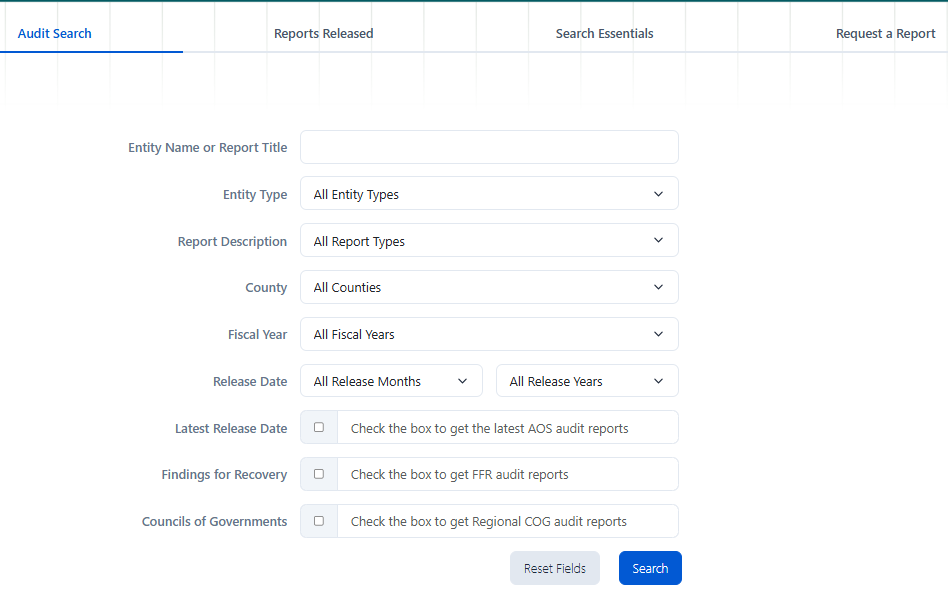
Citizens can review official audit reports through the Ohio Auditor of State’s Audit Search portal:
Official Audit Search Portal: https://ohioauditor.gov/AuditSearch/Search.aspx
(Search for “Clinton County” to view available audit reports.)
Steps to Review Audit Reports
Follow these steps to access and review public audit reports:
- Visit the Ohio Auditor of State website.
- Click on the Audit Search tab.
- Enter “Clinton County” in the Entity Name field.
- Select “Clinton” from the County dropdown.
- Choose the desired fiscal year (if needed).
- Click Search.
- Open and download the report in PDF format.
When reviewing an audit report, focus on:
- The auditor’s opinion (unmodified/clean vs. qualified opinion)
- Any listed audit findings
- Management responses and corrective actions
- Notes regarding financial compliance
Frequently Asked Questions
Understanding Clinton County Auditor financial reports helps residents stay informed about budgeting decisions, public spending, and overall fiscal health. These financial reports provide transparency into how taxpayer funds are collected, allocated, and audited each year. Below are six commonly asked questions that address report access, audit procedures, and general taxpayer inquiries related to county finances.
How do I download revenue reports?
To download the latest revenue report from the Clinton County Auditor, visit the official county website and navigate to the Financial Reports or Budget section. Revenue reports are typically organized by fiscal year and may be included within the annual financial statement. Select the appropriate year to open the document page, where files are commonly available in PDF format and sometimes in Excel. After opening the report, use the download option to save a copy for your records. If you are unable to find the document online, you can contact the Auditor’s office directly for assistance or clarification.
Where can I find expenditure summaries?
Expenditure summaries are usually published within the same Financial Reports section of the county website. These summaries outline departmental spending, operational costs, capital projects, and fund distributions for each fiscal year. By reviewing these reports, taxpayers can see how public funds were allocated and compare year-to-year changes. Most summaries are included in the annual financial statement document, making it easier to review revenues and expenses together. Archived reports from previous years are often available for download. If an older report is missing online, it may be requested through the Auditor’s public records process.
How often are audits conducted?
Financial audits for Clinton County are performed by the Ohio Auditor of State on a regular schedule to ensure compliance with state laws. Depending on statutory requirements, audits are generally conducted annually or every two years. The audit process includes reviewing financial statements, examining internal controls, and verifying that funds are managed appropriately. Auditors also evaluate whether the county follows proper accounting standards. After completion, an official audit report is published for public review. These regular audits promote accountability and strengthen trust in local government operations.
What is included in annual statements?
An annual financial statement provides a complete overview of the county’s financial activity for a specific fiscal year. It typically contains revenue reports, expenditure summaries, fund balances, and detailed notes explaining accounting policies. The statement may also compare budgeted amounts to actual results, highlighting any significant variances. This document gives residents insight into how funds were generated and spent during the year. It reflects the county’s overall financial position at year-end. Reviewing the annual statement helps taxpayers better understand long-term financial trends and fiscal planning.
Are financial reports public records?
Yes, all Clinton County Auditor financial reports are considered public records under Ohio transparency laws. Residents have the right to review, download, and request copies of these documents. Most financial reports are posted online for convenient public access without requiring a formal request. If a specific report is not available digitally, citizens may submit a public records request through the Auditor’s office. Providing open access ensures government accountability and informed civic participation. Public financial transparency allows taxpayers to monitor how their contributions are managed.
Can I compare reports from different years?
Yes, archived financial reports allow residents to compare revenue, expenditures, and budget performance across multiple fiscal years. These comparisons can reveal spending patterns, changes in tax collections, and shifts in funding priorities. By reviewing reports side by side, taxpayers can better understand financial growth or reductions over time. Most annual statements are organized chronologically on the county website for easy reference. Downloading reports from different years enables detailed personal analysis. Comparing financial data over time supports informed discussions about budgeting and fiscal responsibility within the community.